Per Cent for Art Scheme - Inis Cealtra (Holy Island) Visitor Experience Artwork Commission
Clare County Council is seeking proposals to commission new artworks for the Visitor Experience Center at Inis Cealtra (Holy Island).
Background to the Project
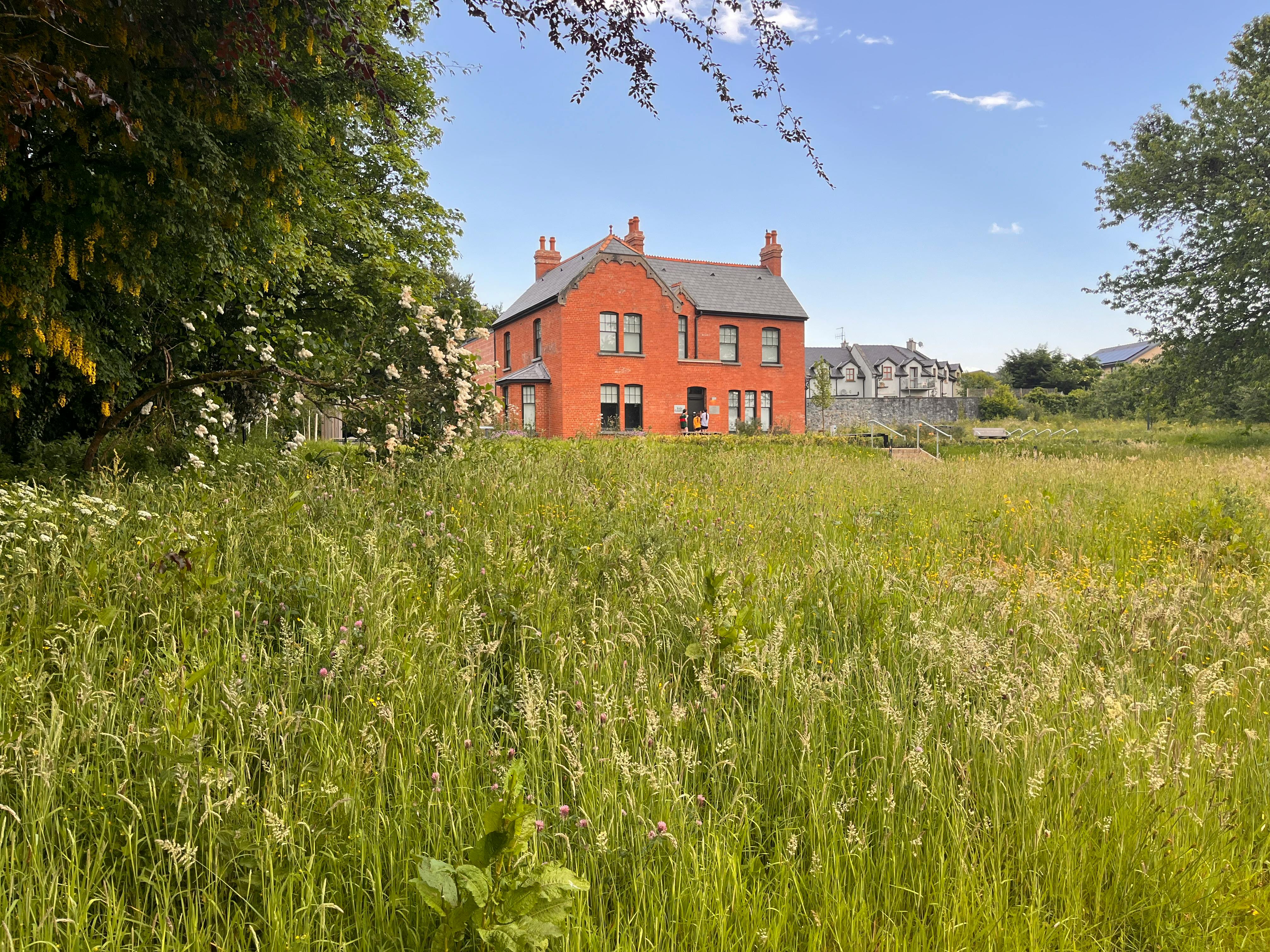
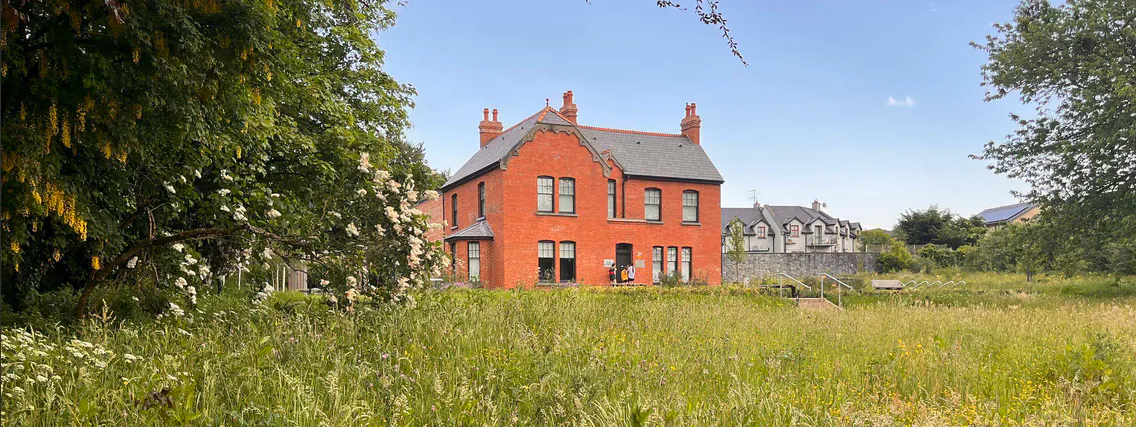
In 2015, Clare County Council took 50 acres of the Inis Cealtra Island (Holy Island) into public ownership. In 2022, Clare County Council acquired the Old Rectory Building in Mountshannon overlooking Mountshannon Harbour, Scarriff Bay and Lough Derg. The building was extended, refurbished and the museum was fitted out to create what is now the interpretative visitor centre.
The visitor centre building comprises of a reception area, three exhibition areas interpreting stories from Mountshannon and the island of Inis Cealtra, as well as a revitalised Rectory Garden. Boat trips will initially focus on bringing visitors around the island, while trips to the island are part of the future plans for the overall experience. Funding received through the Department’s Rural Regeneration and Development Fund delivered an upgrade to the public realm in the village.
Utilising the Per Cent for Art Scheme, which is designed to integrate art into public spaces, enrich communities, and support the work of artists across Ireland, Clare County Council now wishes to commission an artwork as part of the Rectory Development, to the value of €21,500 incl. VAT in the Rectory Gardens. The brief for this commission has been devised in consultation with local partners.
Mountshannon has a long standing strong cultural and artistic heritage. There is a strong artistic community in Mountshannon comprising of volunteers, who are either active artists in a variety of artistic fields or friends and supporters of arts and culture.
Mountshannon Arts organise and support multiple cultural events in the village annually: concerts, theatre and literature events, exhibitions and workshops aiming to develop and promote the arts all year round. They run the Mountshannon Arts Festival annully, formerly known as the Inis Cealtra Arts Festival, and have created the art trail in the village, some elements of which have become landmarks in the village and in the county.
Mountshannon Community Council are very active in the community. Run by a group of volunteers, elected by the community every 4 years, they are responsible for a Community Childcare facility, a DEASP Community Employment Scheme and the general enhancement of the Mountshannon area from a cultural and tourism perspective.
Vision for the Artwork
It is the vision of the commissioners that this commission would align with the local communities’ goals of fostering artistic engagement and enriching the local cultural landscape.
To this end there is a desire for a unique and innovative work of art, that enhances the community’s reputation as a hub for creativity and cultural expression.
A distinctive artwork is required that reflects the unique character and history of the area and of the Rectory.
Historical Context
Inis Cealtra, also known as Holy Island, is one of Ireland's most famous monastic sites. Located on an island in the beautiful Lough Derg, this historic site has been a place of significant importance for hundreds of years.
Inis Cealtra is derived from the Irish for the "island of burials" or "of monastic cells". The earliest records show that the island has been in use since the mid-sixth century.
The island lies approximately 300 meters from Knockaphort Pier. It is accessible via boat although many locals choose to swim to and from the island.
With strong roots in early Irish Christian times, Inis Cealtra was a site of pilgrimage up until the mid-19th century. Over the years, Inis Cealtra has been associated with many Irish saints, most notably, St. Caimin, who founded a monastery there during the sixth and seventh centuries.
In 836 and 922, the Vikings raided and burned the monastery there. Attacks from Norsemen continued over the years. Despite this, the island remained in constant occupation until the thirteenth century.
The famous High King of Ireland, Brian Ború, had a brother who was abbot of Inis Cealtra. It is said that Brian Ború had one of the churches on the island built.
This 50-acre site is home to the ruins of six churches, an early monastic cell, several cemeteries, and more than 80 recumbent graves with an inscription or cross. While there are several cemeteries on the island only two remain in use with the late great Dame Edna O'Brien being one of the most recent people to be buried there.
However, the most famous of historical structures on the island is the round tower. This 24.4 meter round tower is believed to have been built in 1000 and at the original could have been 30 meters high.
There are four windows, one at each point of the compass. The lowest one facing north has a triangular head, the others are rectangular openings. It has a round headed doorway at 3.05 metres from the ground and facing east (90°).
Unfortunately, this round tower is missing its conical cap. As such, it has no roof and excavations by Doctor Liam De Paor in the 1970s revealed no stones that may have formed a cap were ever found, indicating that it was never completed.
This gives strength to the legend that a beautiful red-headed woman distracted the mason during the building. Others believe that Brian Boru wanted this tower to be built but he died in battle in 1014 and the tower was left unfinished.
Site of the Art Work
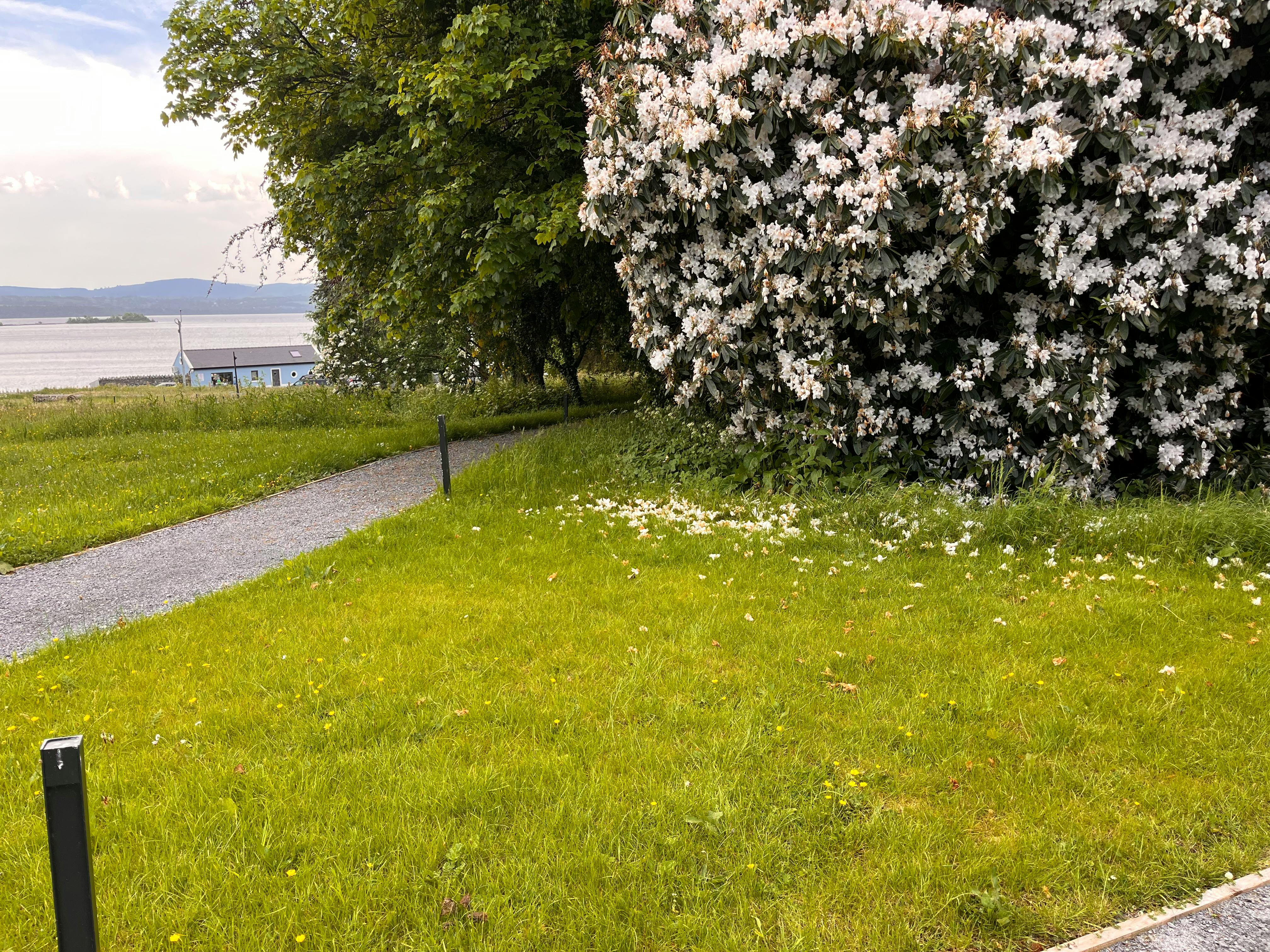
The artwork will be located in the gardens of Inis Cealtra (Holy Island) Visitor Experience at the Rectory in Mountshannon
As you exit the Rectory front door the artwork will be located in front of you to the right. There are two potential locations for the artwork:
a) Site 1: Adjacent to the exit into the Aistear maze
b) Site 2: Further down from this, in the lower segment of the garden
Please refer to the map for the two potential locations marked X:
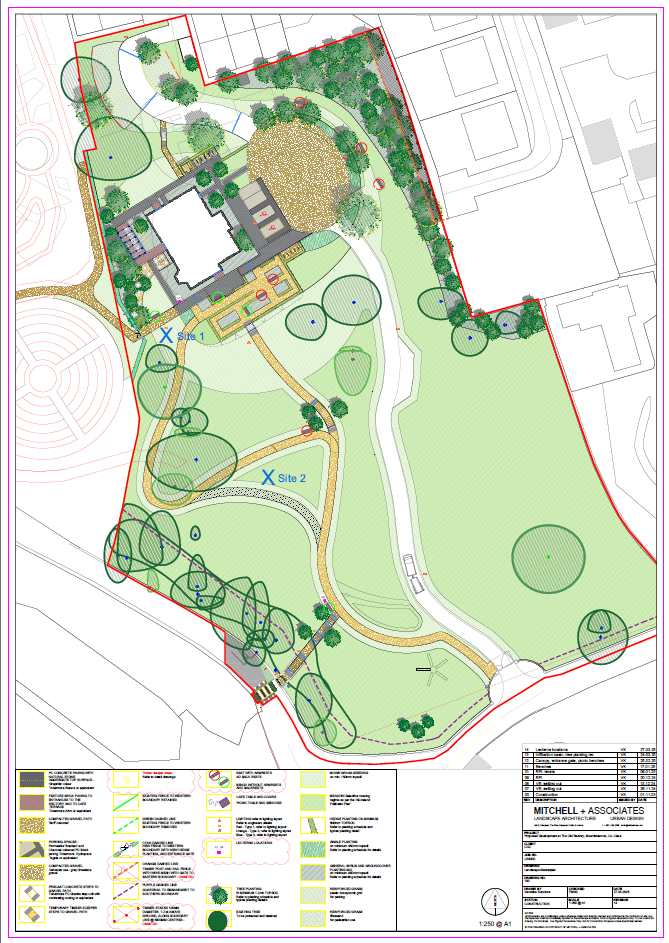 Proposed Locations for the Commissioned Art.
Artist Commission Process
Artists will be selected through an open competition process. It is envisaged that this will be a one stage commissioning process.
The commission budget for the artwork is €21,500 incl. VAT and all taxes and charges.
Site Visit
A site visit will take place on 27th July. The Eircode is V94 P66V.
Artists intending to attend should register with Rachel in Clare Arts Office
☎ (065) 68 99091
✉ rmacmanus@clarecoco.ie.
Artists should meet at the front door of the Rectory at 11am on the 27th of July.
For those unable to attend the site visit, notes on the visit will be added to this page.
In attendance
- Siobhán Mulcahy, Clare Arts Officer
- Rachel Macmanus, Public Art Coordinator, Clare Arts
- Theresa Hughes Lannon, Acting Senior Executive Office, Tourism, Festivals & Events Unit, Clare County Council
- Feargus McGarvey, Rectory Gardens Landscape Designer
- Mel White, Mountshannon Arts Festival Director
Timeframe
- The deadline for artist(s) submissions is 17th September
- No late applications will be accepted. The overall timeframe for the commissioning process is as follows:
- The closing date for registration for the Site Visit is 24th July
- Site Visit to Mountshannon will take place on 27th July
- Panel assessment will be held in October with notifications issued to artists no later than October 31st, 2026.
Selected artist(s) informed by:
Date to be confirmed once submission closing date is confirmed
Commission target completion date:
January 2027 but this will be dependent on the chosen proposal and its timeline
Selection Procedure & Selection Panel
The selection panel will comprise of
- Community representative
- Member of the Project Team
- An artistic advisor / independent artist
It will be chaired by a representative of Clare County Council Arts Office.
Criteria for selection
- Track record or potential of the artist (20 marks)
- Quality of the idea presented including originality, innovation, impact and scale (20 marks)
- Suitability and connections made to the context of the location and proposed positioning on the site (20 marks)
- Feasibility, durability and implications for future maintenance, where appropriate. As part of Clare County Council’s Green Procurement Policy artists should outline if they have processes that contribute to a reduced environmental impact when creating the work. (20 marks)
- Budget – artists must ensure that they are being adequately recompensed for their work. At least 25% of the budget must be allocated towards artist fees. (20 marks)
Artists’ Submissions
- A typed CV [maximum 3 pages]
- Examples of previous work in the form of photographs and / or digital images. Note: No more than 10 images in total should be submitted in 1 PDF document.
- The commission proposal should include why you are proposing this, how you will achieve it and what the outcome will be. The commission proposal should be uploaded as 1 PDF document.
- Detailed explanation of the proposed project including dimensions [preferably in metric], materials, etc. and the specific location.
- Details of the technical specifications, construction, installation process, etc. for the artwork, where appropriate.
- Visual representation of the proposed public art project in situ, using – for example, drawings, computer generated images, photographs.
- Timescale for realisation.
- Required ongoing maintenance for the artwork
- Budget Outline – an outline budget is provided if you wish to use this template. You are welcome to submit your own budget also.
- Green procurement: We would ask that the applicant observes green procurement policies when planning production and creation of artworks.
Requirements from Successful Candidate
The successful artist(s) will be required to provide Clare County Council with supplementary materials such as:
- Tax clearance certificate
- Evidence of public liability insurance
- Health and safety documentation
- Evidence of payment of customs / tariffs as necessary
- Any other information that the commissioners deem necessary prior to signing of contracts.
These are not required at submission stage but in making a submission the candidate agrees to produce all necessary documentation required by Clare County Council.
Applications
Applications can be made online via this form on the Clare CoCo Submit platform, or by scanning the QR code below.
 Scan to apply